How Fast Can You Go From Bronze to Unreal in Fortnite Reload?
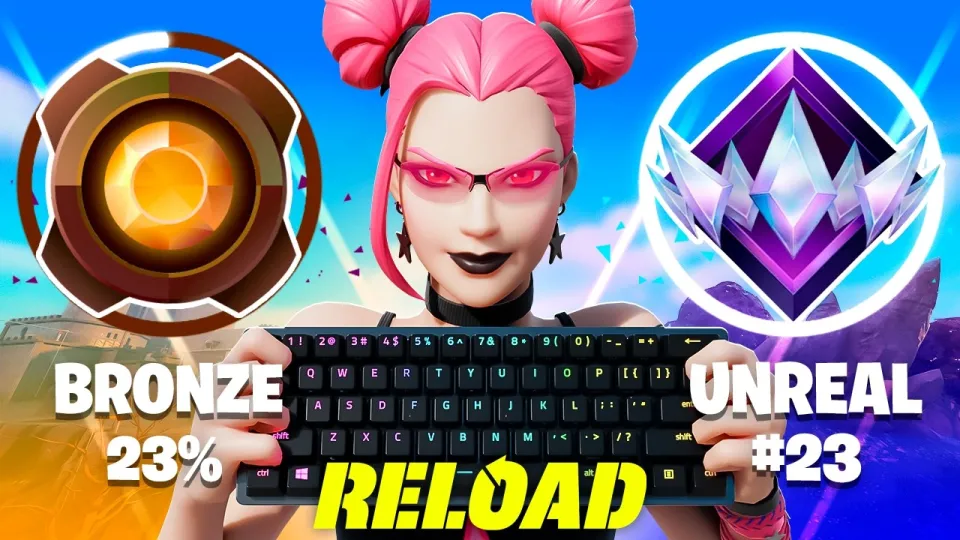
Video: BRONZE To UNREAL Ranked Speedrun In Fortnite Reload!
Want articles like this for your own video to promote it on YouTube and Google? Order them through the Telegram bot @sat_sit_bot. The bot writes and publishes the articles itself (with your YouTube video embedded) on popular topical websites (no ads). Free trial — 50 articles.
· based on the channel HaloBT
Key takeaways
- Fortnite Reload is a faster respawn-based mode, so a Bronze-to-Unreal climb plays out quicker than in standard Battle Royale.
- The climb passes eight tiers: Bronze, Silver, Gold, Platinum, Diamond, Elite, Champion and Unreal.
- HaloBT ran the challenge solo in Reload ranked and published it on October 11, 2026.
- Gold is the first real filter: viewers describe it as the toughest stretch of the run.
- The creator's practice map (code 6317-4546-8691) is built for warm-ups before ranked sessions.
Fortnite's Bronze to Unreal climb in Reload mode is a ranked speedrun where a player starts at the lowest tier and pushes through every division to Unreal, and it is faster than the same challenge in standard Battle Royale because Reload's respawn system shortens matches and rewards constant fights. HaloBT took on exactly that run solo in Reload ranked, and the full attempt is live on the channel. Players who want to practice the same mechanics can grab the creator's training island through his Fortnite hub at MoreHaloBT's Fortnite maps and updates, where new builds and map updates land first.
What makes a Bronze to Unreal speedrun in Fortnite Reload different
Reload compresses the ranked grind because the mode itself compresses matches. Instead of one life and a slow rotation, Reload drops players into a smaller, respawn-enabled arena where eliminations, revives and team fights happen back to back, so placement points and elimination points accumulate much faster than in a 100-player lobby. A solo player chasing Unreal in Reload is not just surviving longer than everyone else; they are farming consistent kills while keeping the team alive, and that rhythm is what makes a speedrun possible at all.
The rank ladder itself has not changed: Bronze, Silver, Gold, Platinum, Diamond, Elite, Champion, Unreal. What changes is the time cost per tier. Early divisions (Bronze through Silver) move quickly for anyone with decent aim and build fundamentals, because the point gains outpace the losses. The wall shows up later, when a single bad drop can cost more progress than three good games earn.
The rank-by-rank reality of the climb
Each tier in a Fortnite Reload ranked speedrun asks for a different skill, and treating the whole ladder as one long grind is the fastest way to stall. Here is how the divisions typically behave:
- Bronze and Silver — forgiving point math. Aggressive drops and clean early fights are enough; losses barely sting.
- Gold — the first genuine filter. Competition sharpens noticeably, and viewers of the run called this stretch the hardest part of the whole challenge, comparing its intensity to stacked tournament lobbies.
- Platinum — consistency matters more than pop-off games. Surviving to mid-game with a couple of eliminations beats risky hot drops.
- Diamond — mechanical gaps become visible. Editing speed, box fighting and third-party awareness decide most fights.
- Elite and Champion — point gains shrink and losses hurt, so a speedrun here depends on avoiding dead games rather than chasing highlights.
- Unreal — the finish line. Reaching it in Reload proves the climb, not just the peak.
The takeaway from the tier list is scheduling: a Bronze to Unreal ranked speedrun is won or lost in Gold and Diamond, not in the first hour.
Solo queue versus duo fills in Reload ranked
Running the challenge solo is the cleanest test of individual skill, but it is not the only route. Duo fills add randomness: a strong random partner accelerates point gains, while a weak one forces you to carry fights and revives single-handedly. In Reload specifically, teammates matter more than in standard Battle Royale because respawns and reboots keep squads in the fight, so a coordinated duo can chain points faster than a lone player ever could.
Solo play, by contrast, removes excuses. Every death is your own, every placement is your own, and the speed of the climb reflects pure decision-making. That is why solo speedruns from Bronze to Unreal are considered the more honest benchmark, and why creators tend to attempt them rather than hide behind squad carries.
Controller and input questions behind the run
Input choice shapes how a speedrun feels, not whether it is possible. Controller players lean on aim assist in close-range fights and often build with paddles or claw grip to keep up with edit speed; keyboard and mouse players get faster edits and precise flicks but must manage recoil and tracking manually. The recurring viewer question is whether a controller can realistically reach Unreal in Reload, and the practical answer is yes: the mode rewards positioning, revive discipline and fight selection more than raw edit speed, and plenty of high-rank players compete on pad.
The bigger variable is practice structure. A short warm-up before ranked — aim drills, edit courses, a few piece-control reps — consistently outperforms jumping cold into a speedrun, because the first matches of a session set the tone for the whole climb.
Common questions from players stuck mid-ladder
The most frequent concern among players attempting their own climb is a plateau: improvement slows after switching input or after a strong start, and it becomes unclear what to fix next. The productive fix is to isolate one weakness at a time rather than overhauling everything. Concretely:
- Review two or three lost fights and name the specific mistake (late edit, bad peek, no cover) instead of calling it unlucky.
- Set a session goal that is not rank-based, such as winning three off-spawn fights in a row.
- Use a dedicated practice map for mechanics and keep ranked for decision-making.
- Track placement consistency across ten games; variance in placement usually points to drop-spot problems, not aim problems.
A second common worry is that Gold feels disproportionately hard compared to later tiers. That perception is normal: Gold is where opponents stop making free mistakes, so the same aggressive play that worked in Silver starts costing points. Adjusting pace rather than skill level is usually enough to break through.
Useful links from the video
All official channels and community hubs referenced alongside the speedrun:
- Fortnite maps and updates from the creator: https://www.fortnite.com/@MoreHaloBT
- Community Discord: https://discord.com/invite/halobt
- Twitch streams: https://www.twitch.tv/halobt
- Twitter/X: https://twitter.com/halobombtrooper
- Instagram: https://www.instagram.com/therealhalobt
Final thoughts on the Bronze to Unreal grind
A Bronze to Unreal speedrun in Fortnite Reload is a stress test of pacing as much as skill: the mode hands out fights quickly, and the ladder punishes players who cannot slow down when points get expensive. The divisions that decide the run are Gold and Diamond, where consistency beats highlight plays, and the players who finish are the ones who treat each session as a set of small, fixable problems. HaloBT's attempt is a useful reference point for anyone planning their own climb, because it shows the full arc rather than a highlight reel. If you want to train the mechanics behind that arc, start with the creator's map hub at MoreHaloBT on Fortnite and build a warm-up routine before your next ranked session.
Source: BRONZE To UNREAL Ranked Speedrun In Fortnite Reload! · Markdown version
Questions & answers
How long does a Bronze to Unreal speedrun take in Fortnite Reload?
It depends on win rate and how many points each match nets, but Reload shortens the process compared to standard Battle Royale because respawns keep fights going and matches end faster. A player averaging strong placements and a few eliminations per game can move through the early tiers in a handful of sessions, while Gold and Diamond usually take the longest.
Is it easier to reach Unreal in Reload or in normal ranked Battle Royale?
Reload is generally faster because the mode is built around constant engagements and shorter matches, so points accumulate more quickly. The skill ceiling is still high, though, since opponents in higher divisions fight constantly and punish slow rotations.
Can you hit Unreal on a controller?
Yes. Controller players reach Unreal regularly, and Reload rewards positioning, revive discipline and fight selection more than raw edit speed. Building with paddles or claw grip helps close the mechanical gap, and a short aim and edit warm-up before ranked makes a noticeable difference.
Why does Gold feel so much harder than Silver?
Gold is where opponents stop giving away free eliminations, so the aggressive play that worked in Silver starts costing points. Slowing the pace, taking safer drops and focusing on consistent mid-game placements is usually enough to push through.